The Medieval Origins
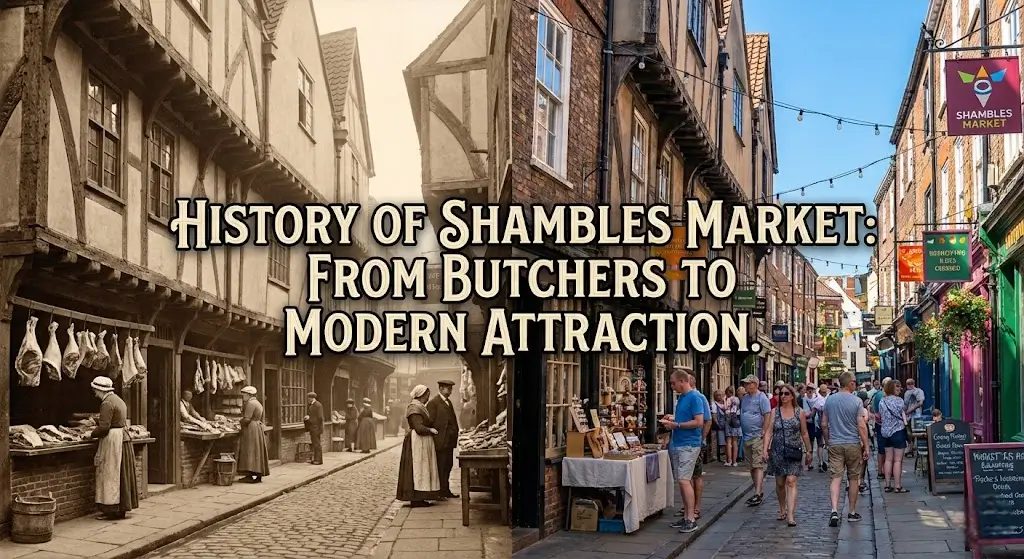
The Shambles is widely considered the best-preserved medieval street in the entire world. Its name comes from the Anglo-Saxon word “Fleshammels,” meaning shelves for displaying meat. This area was originally a busy meat market filled with local butchers.
In the 14th century, the street was known as the “Great Flesh Shambles.” Butchers slaughtered animals at the back of their shops and sold fresh meat. The street design was practical, keeping the meat safe from direct sunlight.
Timeline of The Shambles
| Period | What It Was | Key Features |
|---|
| 1000s–1500s | Butchers’ street | Open meat stalls, slaughterhouses, blood gutters |
| 1600s–1800s | General market street | Transition from butchers to varied shops |
| 1900s–Today | Tourist attraction & heritage site | Preserved buildings, themed shops, food market |
| 2014–Present | Revitalised market & cultural icon | Covered market, food court, Harry Potter link |
Architecture with a Purpose
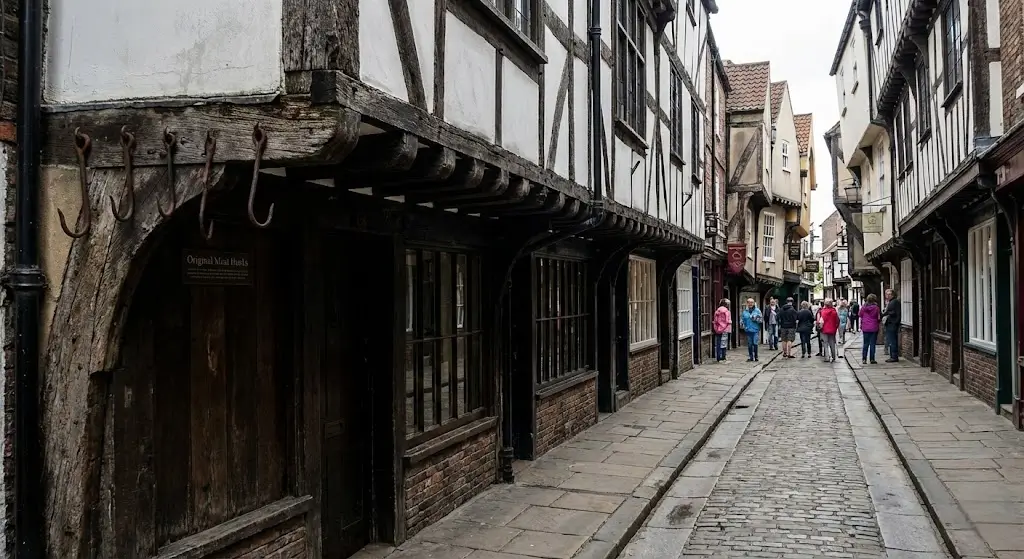
The buildings you see today date back to the late 14th and 15th centuries. The timber-framed houses have overhanging upper floors that almost touch across the narrow street. This design provided much-needed shade for the raw meat displayed on open shelves.
There were no modern sanitation facilities during the medieval period in York. The pavements were raised to create a channel for washing away blood and waste. You can still see original meat hooks on some of the shop fronts today.
Notable Figures and Connections
The street has been home to famous figures like Saint Margaret Clitherow. She lived at number 35 and secretly practiced her Catholic faith there. A shrine now stands in her former home to honor her life.
Many fans believe the Shambles inspired Diagon Alley in the Harry Potter series. The twisting, narrow lanes certainly resemble the magical shopping street from the movies. However, J.K. Rowling has stated she never actually visited the street herself.
Evolution of the Market
York has held a market charter since the Saxon times around 700 AD. Markets moved around the city, from Pavement to Parliament Street and St Sampson’s Square. In 1964, the Newgate Market was created behind the famous Shambles buildings.
This daily market became a central hub for traders and local shoppers. It provided a dedicated space tucked away from the main streets of York. For decades, it served the community with fresh produce and household goods.
A Modern Transformation
York has held a market charter since the Saxon times around 700 AD. Markets moved around the city, from Pavement t
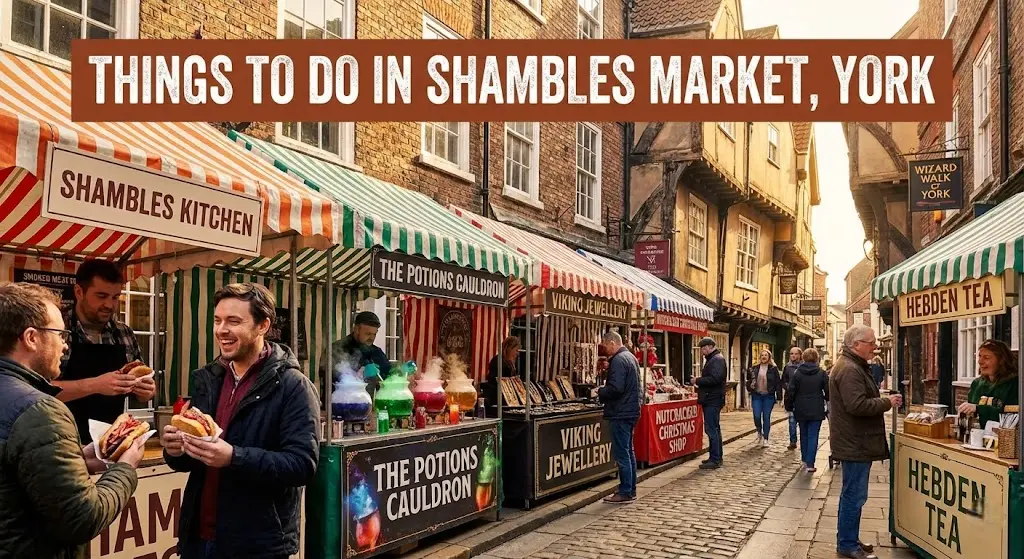
In 2014, the area underwent a significant refurbishment and was renamed Shambles Market. It now hosts 69 covered stalls and a vibrant, popular food court. The market supports independent businesses, allowing them to grow and develop in York.
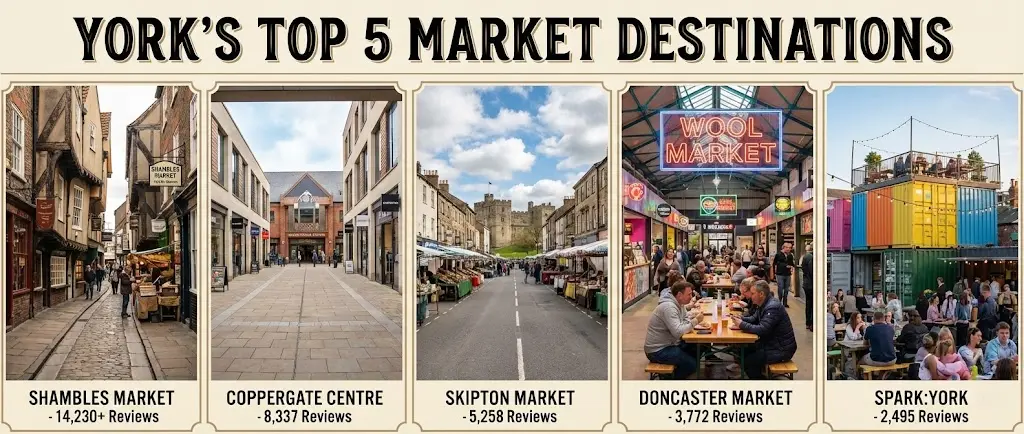
Today, it is a top destination for both locals and international tourists. The market was even recognized as a Tripadvisor Travelers’ Choice Award Winner in 2025. It remains the beating heart of York, blending deep history with modern retail.
o Parliament Street and St Sampson’s Square. In 1964, the Newgate Market was created behind the famous Shambles buildings.
This daily market became a central hub for traders and local shoppers. It provided a dedicated space tucked away from the main streets of York. For decades, it served the community with fresh produce and household goods.
Mosed Asked Question